 The New
Astronomy: Chapter 10
The New
Astronomy: Chapter 10
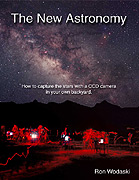
Cover photo: © Tony Hallas
Advanced Image Processing
Once you have mastered the taking of images, it's time to start applying more powerful and also more subtle image processing techniques. A good image is good because it has low noise and lots of data to work with. This allows you to go a little further toward that elusive "perfect image" by applying the advanced techniques you will learn in this chapter. Whether the subject is a distant quasar, dim Bok Globules in the Orion Nebula, or simply an ultra-sharp image of the moon, this chapter will help you take your images to the next level.
Maxim/DL
- Image Alignment Tips and Tricks
- Color Combining Tips and Tricks
- User Filters
- Customized Digital Development
- Gamma Adjustment
- Log Stretch
Astroart
- Image Arithmetic
- Advanced Unsharp Masking
- Advanced Deconvolution
Mira
- To be announced
CCDOPS/CCDSharp
- Advanced CCDOPS Tips and Tricks
- Deconvolution with Lucy-Richardson
Photoshop
- Invert and Multiple
- Manual Digital Development
- Selective Adjustments with Color Range
- Blurring and Sharpening
- Unsharp Masking
- Levels
- Curves
- Color Adjustments
Image Problems and How to Fix Them
- Sky Glow
- Exposures that Are Too Short
- Image Rotation Problems
- Poor Focus
- Star Trails
- Other Problems and Their Solutions
This ultra-sharp image of the moon was made possible by a combination of
a very high-quality image through an APO refractor (Takahashi FC-125)
and careful processing to sharpen the image even further in Maxim/DL and Photoshop.
Image Copyright 2000 by Ron Wodaski