 These images were taken with the following equipment:
- Takahashi Sky90 (FCL90) 90mm refractor with f/4.5 reducer/flattener
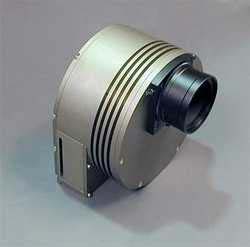
- ST-8I CCD camera
- AP 400 GTO mount
- Guider: SBIG STV (not used on all images)
My overall impression of the ST-8I is a very positive one. I tested it under very difficult conditions, and got excellent results. Although there is no guide chip, the KAF-1602 CCD chip in the 8I is identical to the chip used in the astro cameras. I had never used a non-E chip, so I was concerned about sensitivity. I have an ABG E-chip camera here, and the 8I actually has better QE than the ABG E, which came as something of a surprise to me. I confirmed this fact with Mike Barber at SBIG.
So why are these cameras available at an unusually low price? Herb York at Anacortes is selling them. One of ATWB's industrial clients ordered a bunch of 8I cameras, and then changed their plans. Anacortes is offering the cameras at what I consider a very good price: $2395. The deal looked too good to pass up, so I decided to test one. You can see the results below. The imaging conditions were perfect for testing: really lousy! The limiting visual magnitude started out about 4 and got worse as high clouds moved in. I figured if this camera could deliver good results under those conditions, it would be a good general-purpose camera. Any concerns I had about how a non-E camera would perform under suburban conditions disappeared. There was nothing negative at all during the tests. If and when clear skies return again to Seattle, I'll be trying the camera at longer focal lengths and on different kinds of telescopes. I will also have the camera at the May CCD Imaging Camp at .
About the camera
The chip is quoted as "class 2 or better" which is equal to class 1 under the old Kodak rules at the time these cameras were built. This one was definitely "better." The background was very even, with a standard deviation of 8-10 ADU. There is no guide chip; you'll need to image unguided or using an external guide scope. The chip in these cameras is a Kodak KAF-1602 (non-E, NABG). The camera is not black; it has what I would call a bronze tint (anodizing, not real bronze!). It comes with a case, power supply, etc. Look at the . There are 35 of these available. I consider mine a keeper, so make that 34. <g>
 Trifid.LRGB4.jpg |
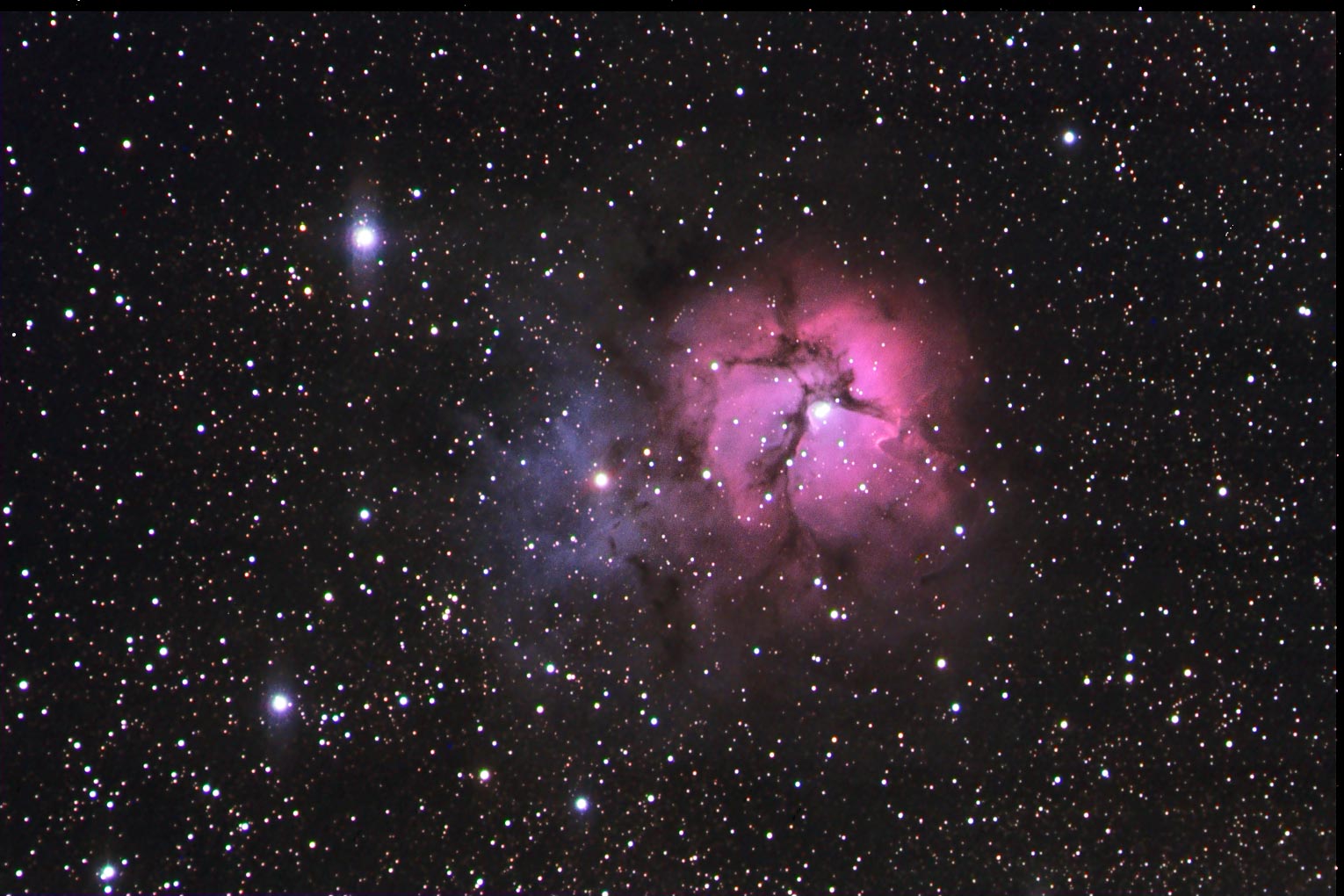
Trifid Nebula
This was my first attempt at a color image with the ST-8I and it turned out great. What I didn't remember, however, was to adjust the length of the blue exposure to the non-E chip. I was able to re-balance the blue color in Photoshop, however, so it turned out alright. I couldn't take as many images as I would have liked because of sunrise. Eight luminance at 3 minutes each, and four sets of 3:3:5 minute RGB images. |
 Crescent_CCDSoft_AVG_LR.jpg |
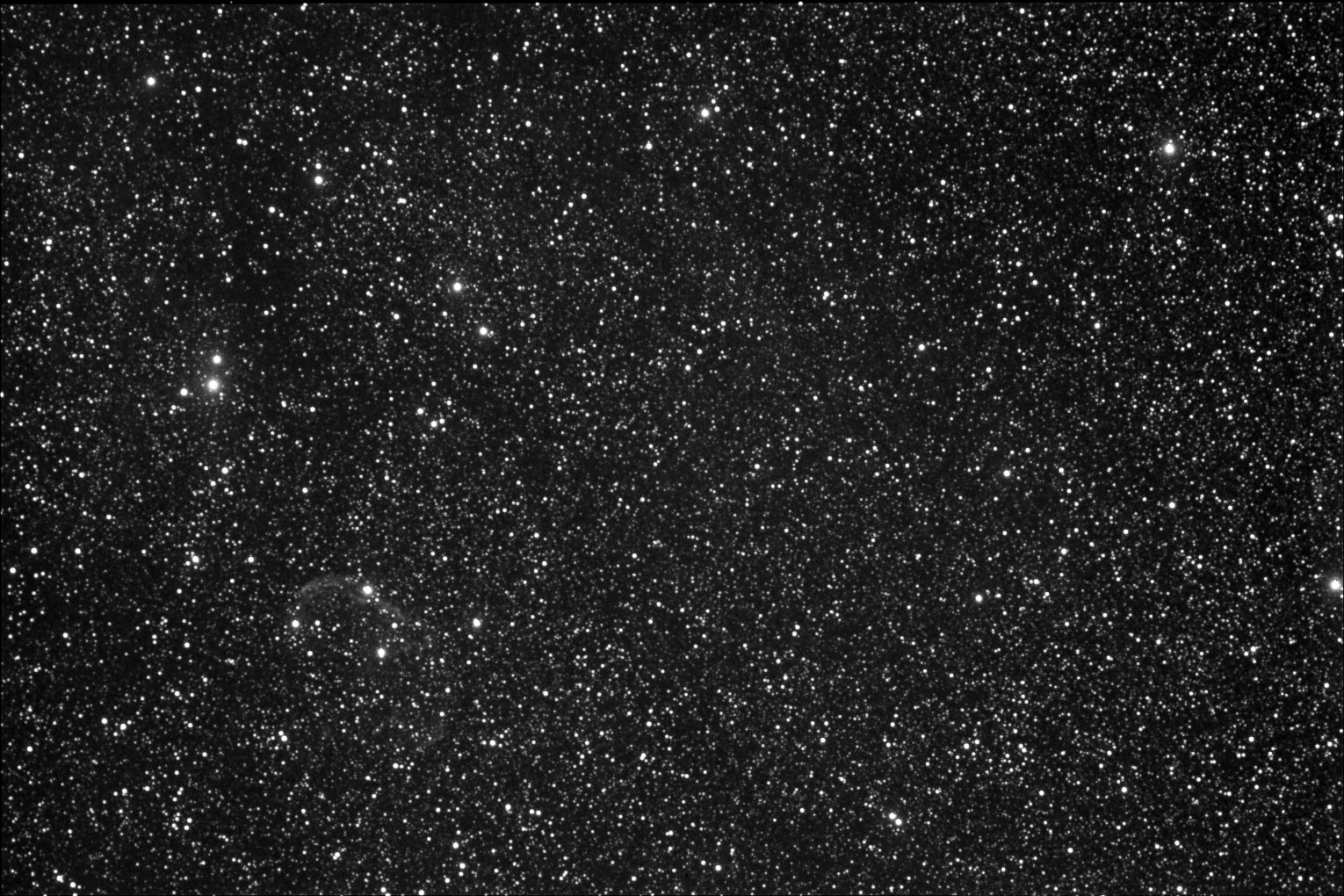
Crescent Nebula
This is an average of 13 3-minute unbinned images. This was taken about 2am, with the Crescent nebula just clearing the roof of my house. Seeing was poor, with high clouds and a bright sky. I still managed to pull out the Crescent by averaging a large number of images. |
 M13B_AVG.jpg |
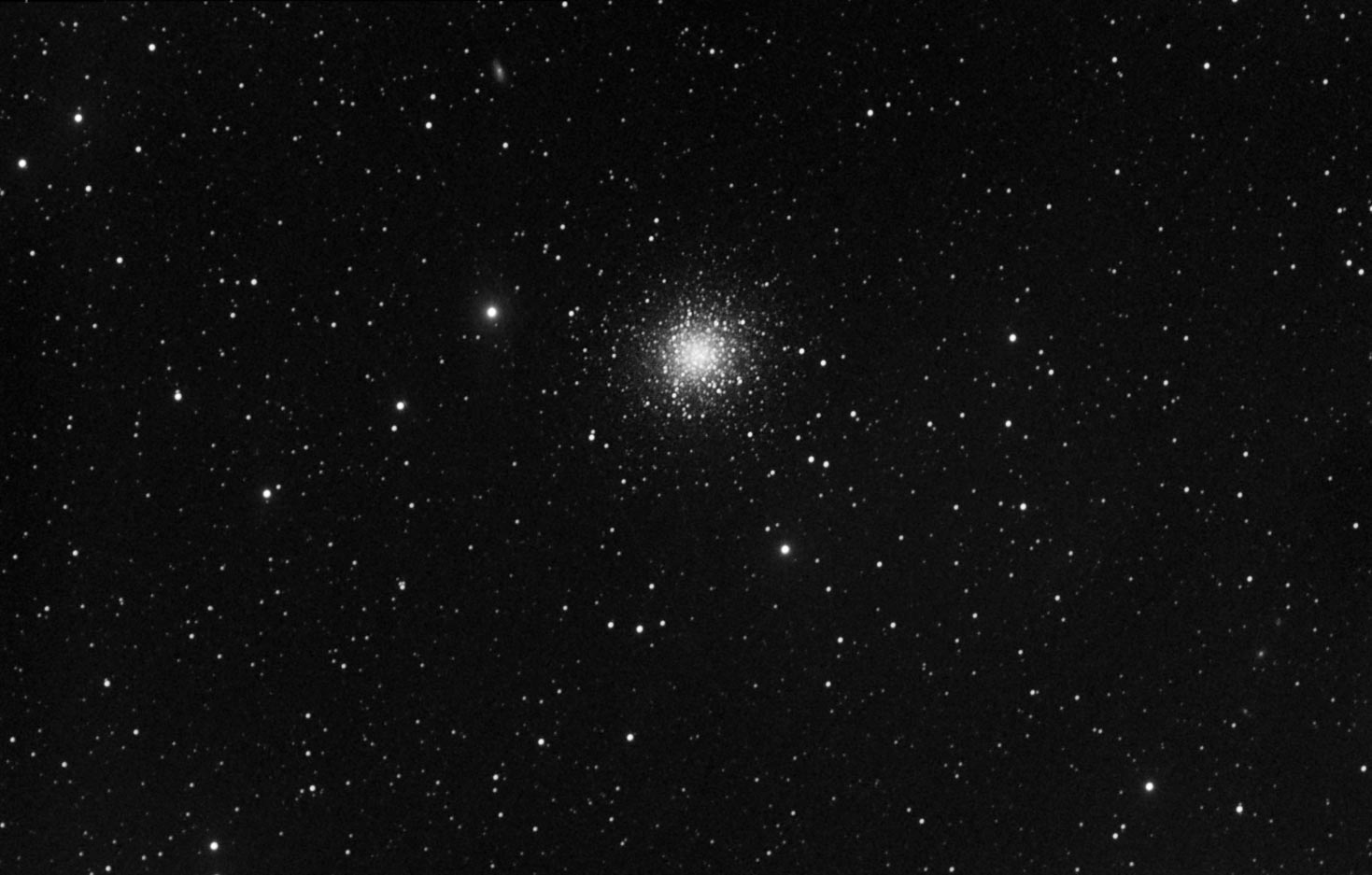
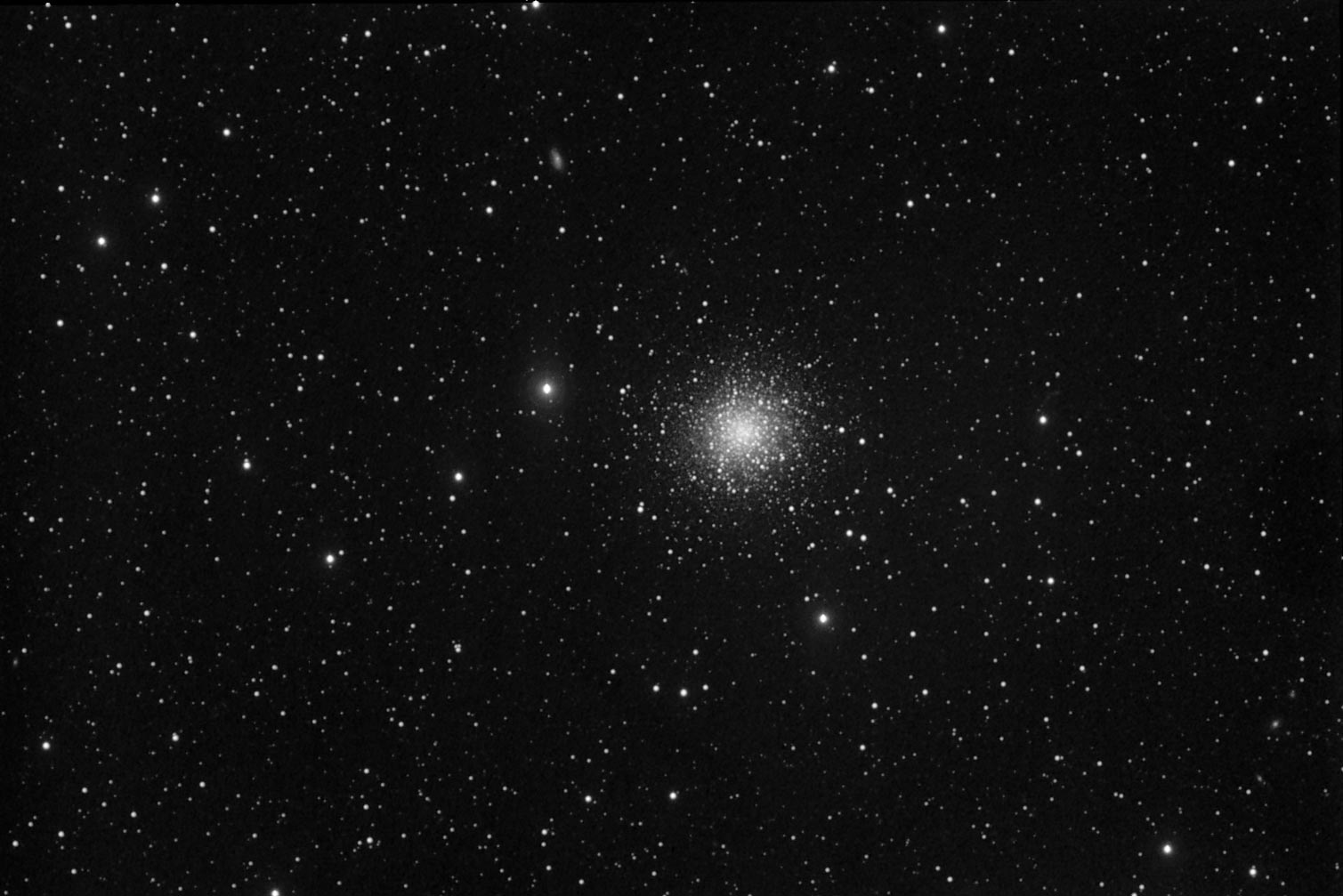
M13
This is an average of 9 3-minute images. I also tried a bunch of 30-second unguided images with good results. NGC6207 can be seen clearly above and slightly left of M13, and the smaller galaxies NGC6196 and 6199 are visible at bottom right. The extent of M13 is excellent, showing faint members clearly. |
 M51_AVG.jpg |
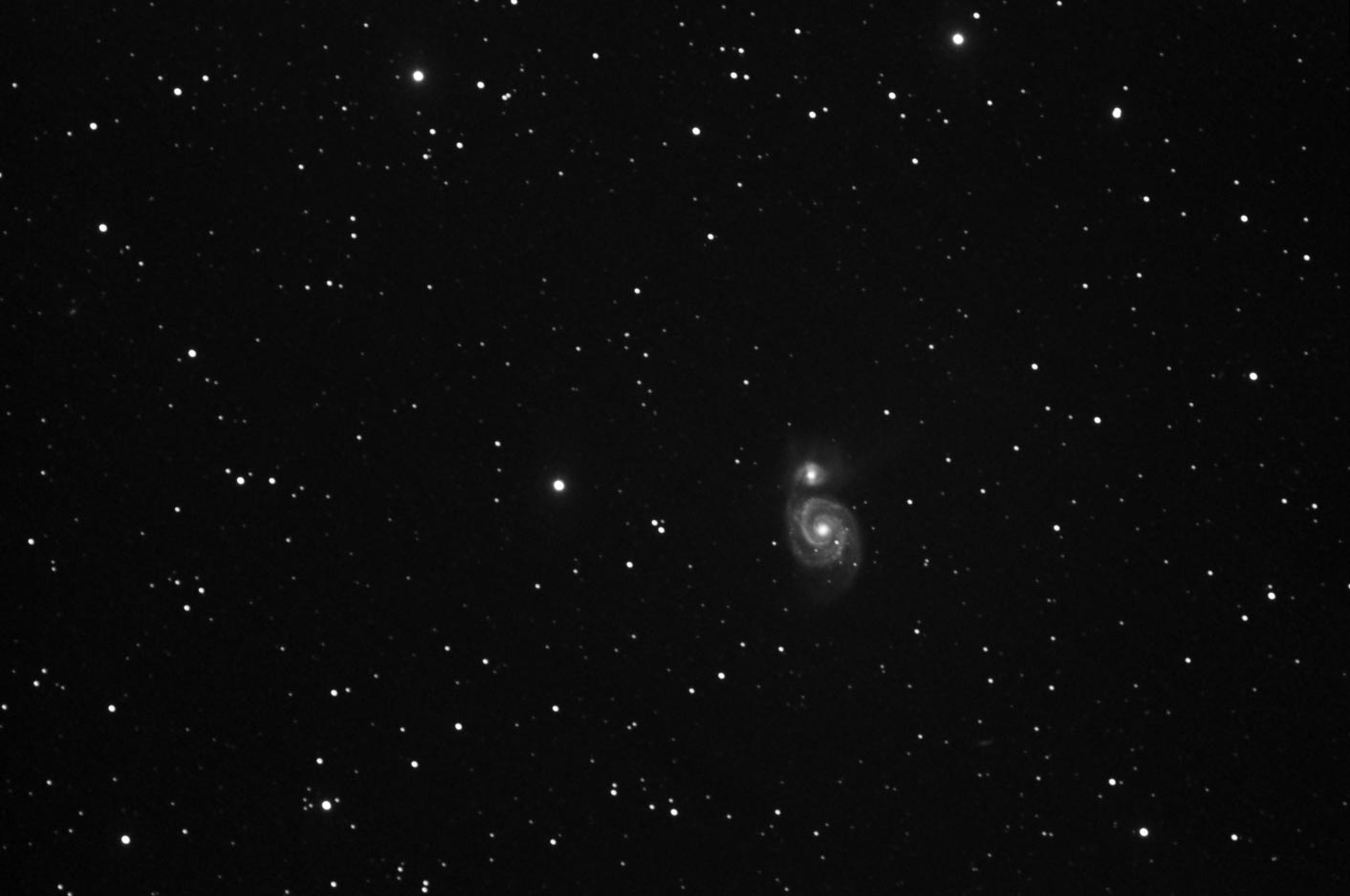
M51
This scope was really too short of a focal length for a meaningful image of M51, but there's not a lot to the east this time of year (other directions are blocked by trees), so I had to find something! The faint streamers of stars flung off in this collision can still be seen despite the small image scale. This is an average of 26 45-second unguided images. You can see a bit of trailing; 45 seconds was too long for my relatively poor polar alignment on this night. I was in a hurry to image before the clouds took over, and it shows up here. |
 NA_Neb_AVG.jpg |
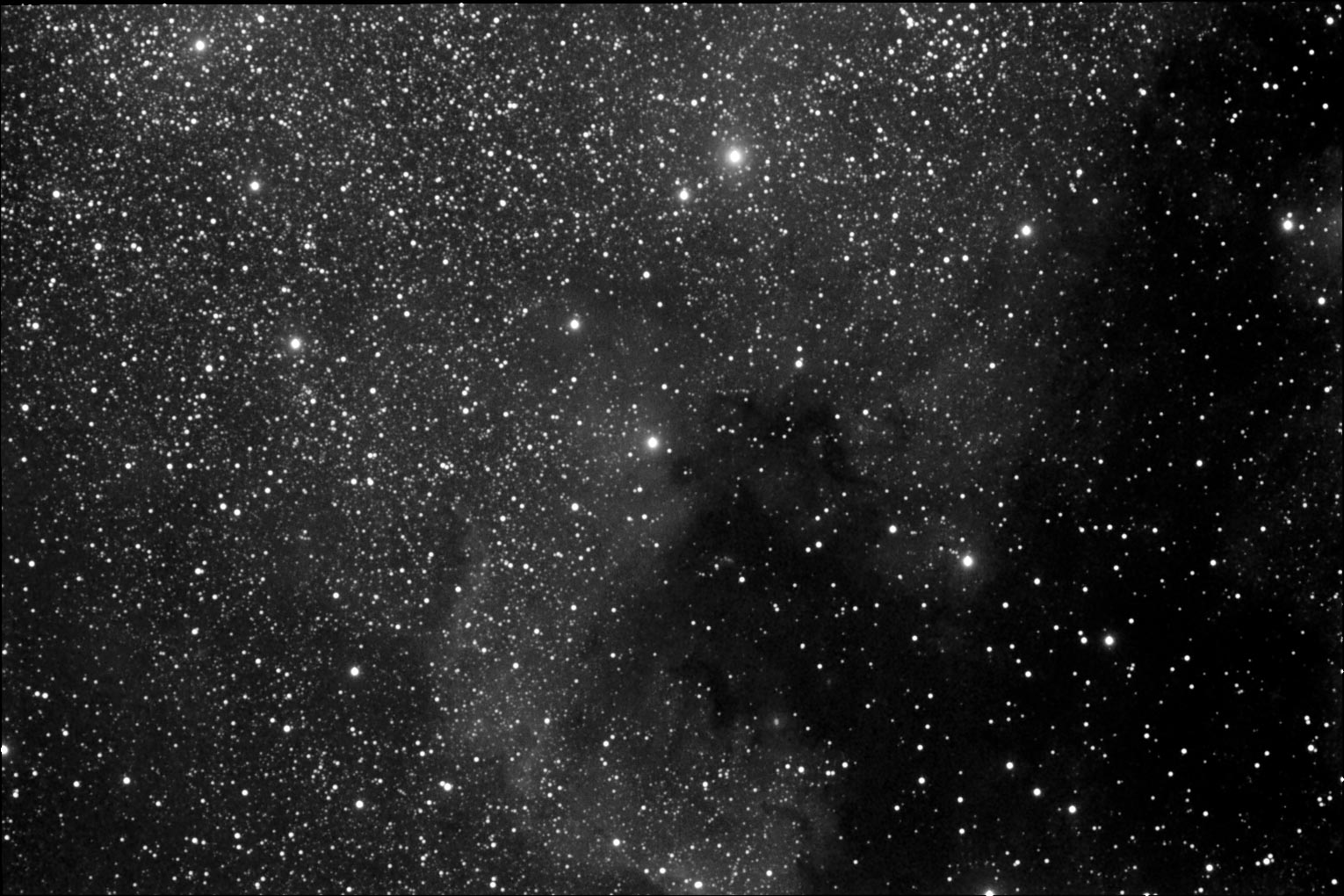
North
American Nebula
I didn't really expect to get much on this image. It was late (3am), the high clouds were threatening to thicken up, and limiting visual magnitude was down to about 3-3.5. My curiosity got the better of me, and I napped while the camera snapped off eight shots before the clouds got too thick to image at all. I would have liked to go deeper, of course, but this 8-image average turned out OK. Reprocessing with a little deconvolution would probably be better; this was also imaged just above roofline of my house to the turbulence was pretty bad. |