Images
of the Moon
|
|
Note: to view all of the
detail in these images, you may need to adjust the brightness and contrast
controls on your monitor. Generally, increasing brightness reveals subtle
details. |
| Lunar
Prospector |
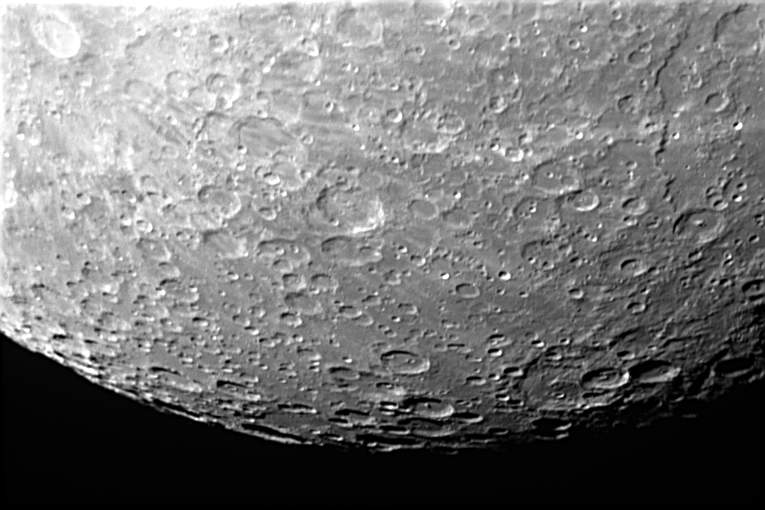
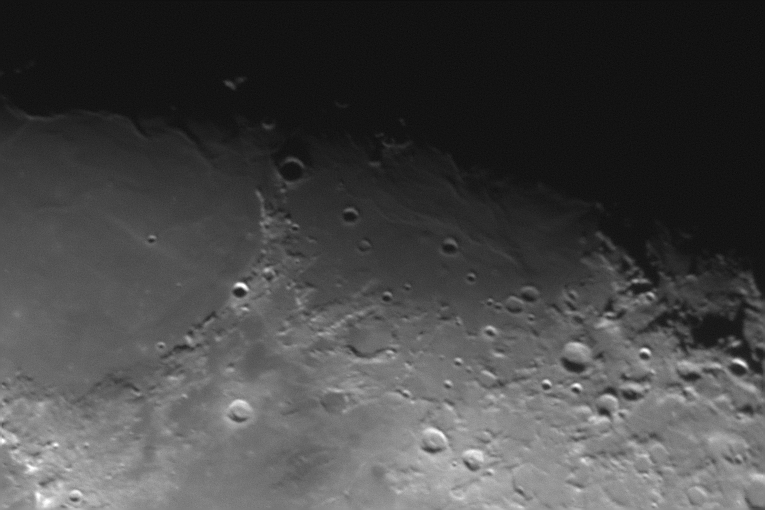
The image at
right shows the area where we once hoped to see the plume from the impact
of Lunar Prospector. This image was taken July 31, 1999 at 2:54am. Click on the image to see a larger version.
The image is a full-frame shot with the ST-7E through a C8,
showing the entire south polar area. No plume is/was visible. This image,
like most moon images, was very short exposure. |
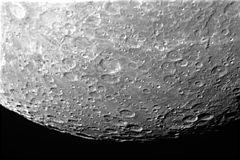
ST-7E, Celestron C8 .25 seconds at 2:54am, July
31, 1999 PDT
|
|
|
|
|
Moon with Takahashi FC-125 |
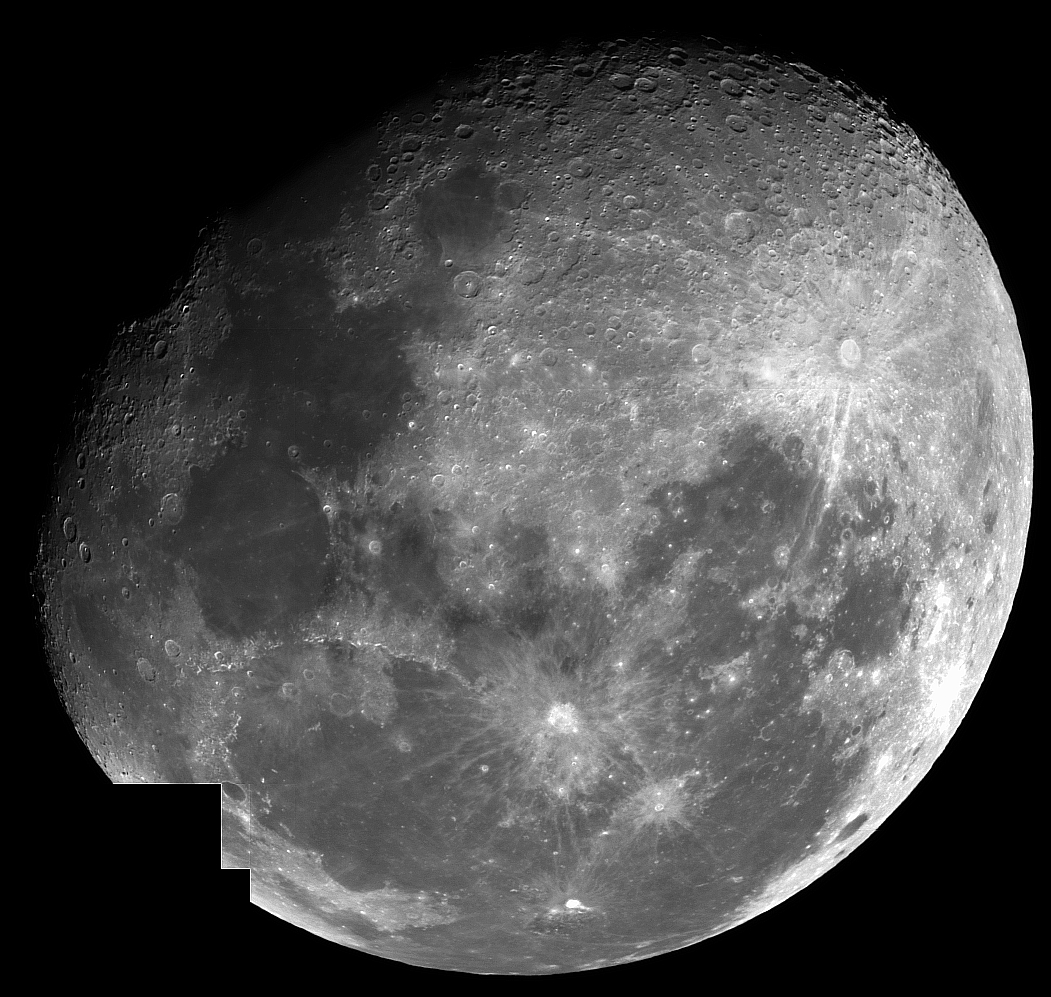
Despite the flaw
of the missing chunk of moon, this image illustrates how effectively an
APO refractor preserves contrast. Both visually and photographically, the
Tak FC-125 has continually amazed with with the details I can see. For
example, I had no idea how pronounced the moon's rays were until I saw
them through this refractor.
The image at right is a collage of a dozen images taken
with my trusty ST-7E camera. The full-size image is quite large (581k) to
preserve the details found in the original. Click the image at right to
see the full-size image. |
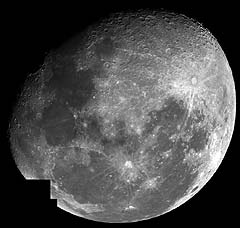
ST-7E, Takahashi FC-125 1/23/2000
|
| Daytime
Moon Images |
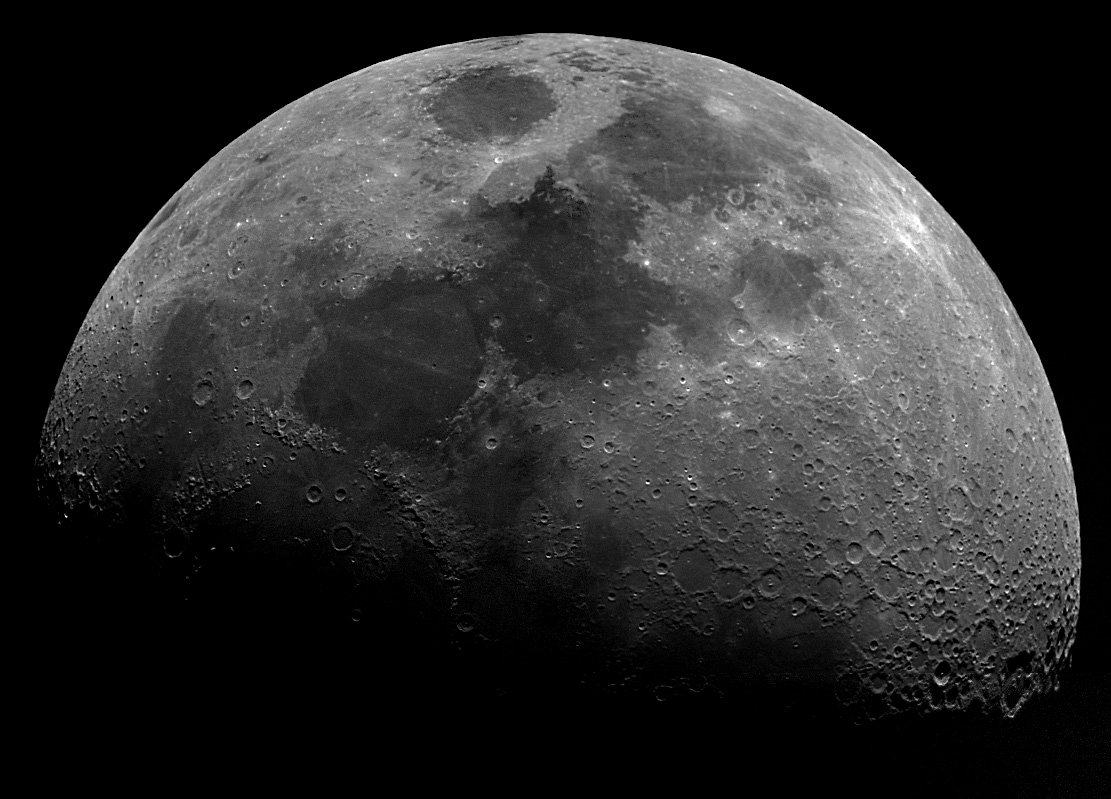
I recently bought
a used Takahashi FC-125, and I have been very impressed with it's
contrast. For fun, I took this image of the moon in broad daylight
(specifically, at 3pm on a sunny day, several hours before local sunset).
The contrast in the image is just stunning, and it shows what a refractor
can do! Also note the difference in contrast and sharpness compared to the
C8 image, above.
Click on the image to see a full-size version. This shot
is a collage of several images, assembled in Photoshop. |
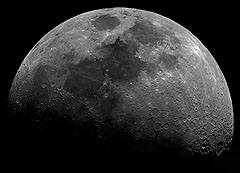
ST-7E, Takahashi FC-125 5" refractor, 3pm
on a sunny afternoon (2/15/00)
|
|
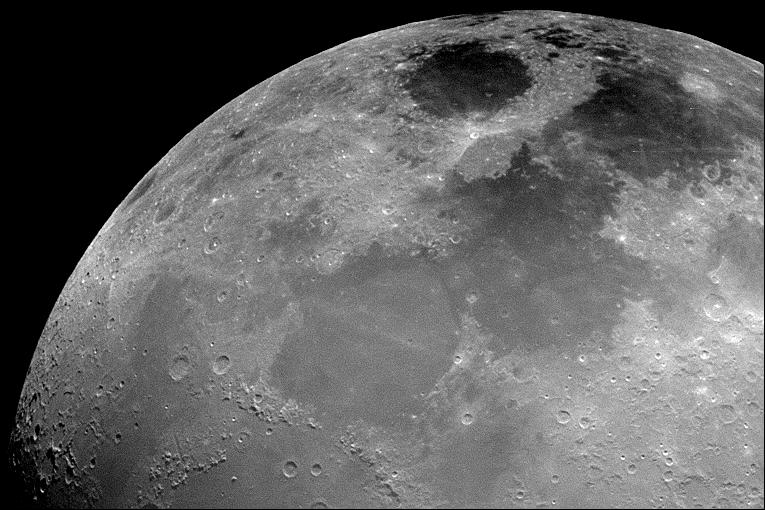
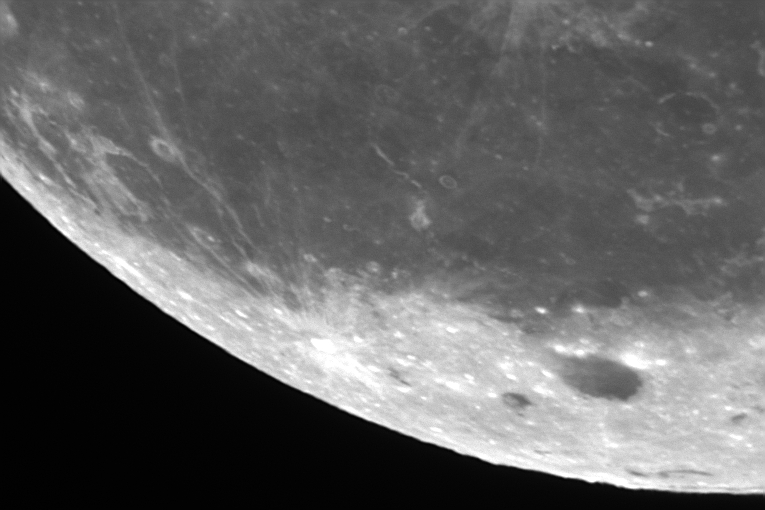
The image at right
is from the same series of images during the daytime, but this exposure
has been optimized to show delicate details on this particular portion of
the moon. (The image above had to be averaged for all the different kinds
of details visible, from sharply shadowed craters to broad plains to
bright rays.) Note the clarity of detail in the rays across the two seas
at the top of the image -- I never even knew these were there. Rays are
one of the first things that a refractor shows much more clearly on the
moon, and I was pleased that this is also true photographically. This
image really shows off the ability of an APO refractor to show subtle
details very clearly. Click on the image to see it full size. |
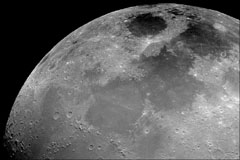
ST-7E, Takahashi FC-125 5" refractor, 3pm
on a sunny afternoon (2/15/00)
|
|
|
|
| The
Moon through an 8" SCT |
The image at right
was taken in August last year, shortly after I acquired a nice C8 SCT. It
was, oh, my third scope in a search for a larger aperture that would work
well for astrophotography. I had heard that a better-than-average C8 would
be a good CCD imaging scope -- plenty of aperture, and if I was careful I
could get decent optics. The image at right is probably one of the best
moon images I achieved with that scope.
While it did a pretty good job, it
took a lot of image manipulation to bring out decent contrast. I was
pretty much limited to naturally high-contrast subjects, such as these
craters near the terminator. Images of the fully illuminated surface were
OK, but they were lacking in contrast as shown at bottom right. That image
has basically the same processing as the image taken through the FC-125
above, but there is less contrast and the image isn't quite as sharp.
Click on each image to see it full size.
|

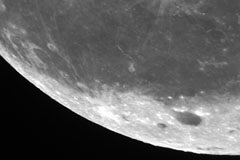
Both images: ST-7E, Celestron C8, 8/1/99
|
|
|
|
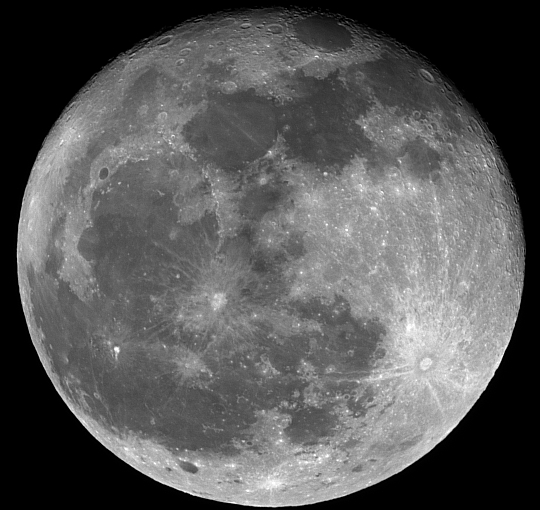
| The
Moon through a Takahashi FC-60 |
This was one of
those spur-of-the-moment, why-not things that turned out to be much better
than I expected. The Takahashi FC-60 is a 60mm refractor that has always
amazed me with its sharpness and contrast. I have enjoyed using it
visually on planets and Messier objects. At first, I was trying to see if
I could see anything at all, but when I could make out the hole in M57
with it, I knew it was a pretty good little scope! I didn't expect results
this good when I put the CCD camera on the scope -- heck, the CCD camera
was just about as big as the telescpoe!
This image of the moon shows what the little FC-60 can
do. This f/8.3 refractor provides a very wide field of view, allowing me
to put the entire moon on the chip of my ST-7E camera. The image is sharp
and contrasty, showing that even a little-bitty refractor can do a great
job. Click on the image to see it full size. |
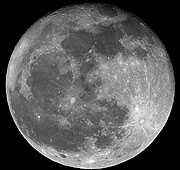
ST-7E, Takahashi FC-60 refractor, 8/25/99
|
|
|
|
| The
Moon through a Takahashi FS-102 |
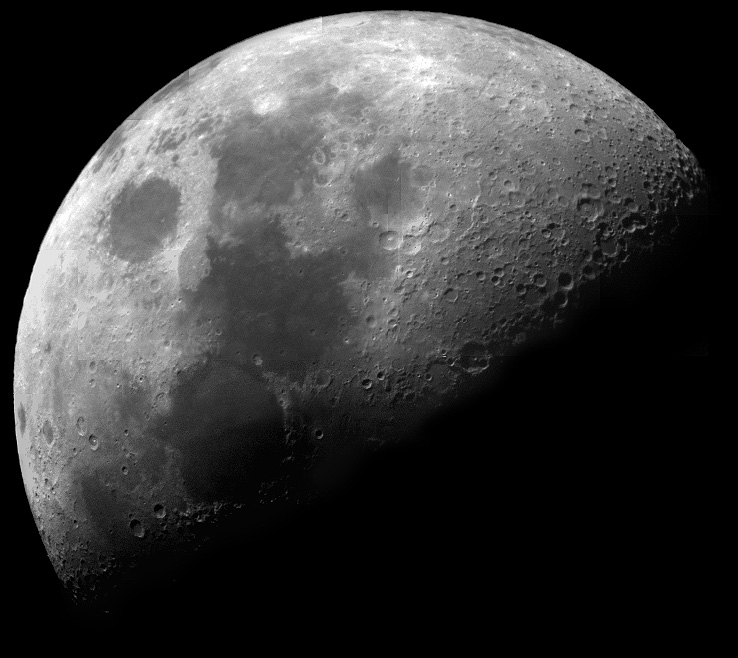
This collage was
taken when I was just getting started in CCD astrophotography. It was
taken through yet another Takahashi refractor, the FS-102. As usual, (ho
hum!) the contrast is very good, sharpness is excellent, etc. etc. The
mount was an LXD500, which was not stable enough for long-exposure
imaging, but it worked quite well for very short exposures (0.11 seconds
for this one).
Click on the picture for the full-size image. |
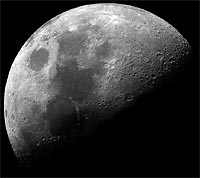 ST-5C,
Takahashi FS-102 refractor, April, 1999
|