The JMI Encoders on the Takahashi NJP-160 mount
I installed the JMI encoders on my Takahashi NJP-160. There were a few blips in the process that are worth knowing about.
-
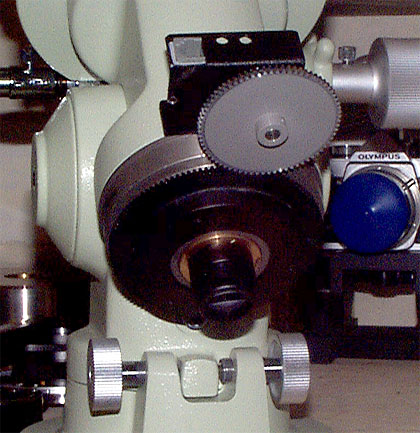
The new NJP mounts have a small bulge at the base of the RA axis, where a little index mark is installed to indicate the current RA setting. This bump is new. You remove the index marker plate, and install the encoder housing in its place. The bump raises the encoder housing a small amount, and you will need a larger gear than the stock gear that JMI includes. Just ask for it if/when you order your encoders.
-
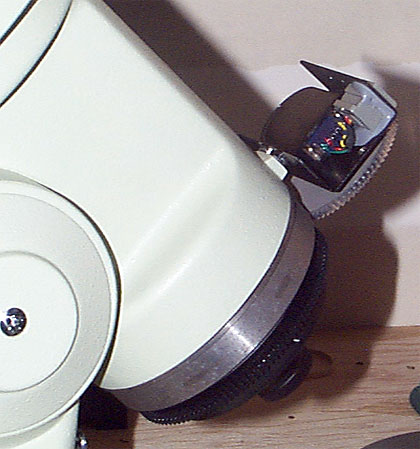
You will need to remove the housings from the ends of the Dec and RA axes in order to mount the gears. This makes your mount look UGLY. Be forewarned!
-
You can use the screws that JMI provides for the Dec encoder housing. However, Takahashi has used much smaller screws for that little index mark, and you will need to re-use the Takahashi screws for the RA encoder. They are just barely long enough to work, but they will work if you are careful to tighten them alternately; otherwise, you will tilt the encoder housing and the second screw will not go in. I think these screws are a metric thread, and I could not find them in my local hardware store. A 2x56 screw is too large!
-
The larger gear on the RA axis means you have to use a different number of tics when you set up The Sky for your encoders. The correct figure is 6599, and you use the regular 11312 for Dec. Note that these numbers are larger than the 4096-tick encoder values; the gearing is what gives you higher resolution. JMI does not offer the 8000-count encoders for the NJP, but they should given that the larger encoders would work just fine in this application. However, I'm not sure you would gain a whole lot if they did, since the encoder shaft would move away from the axes, and you would need to use larger hears, which would reduce the increase over actual encoder tick counts. Still, there would be a net gain in tick count and in ugliness. <g>
-
When setting up in The Sky, retain the Clockwise orientation.
-
You will not need to use the shaft extender that JMI supplies for the NJP; the location of the new screw holes eliminates the need for it.
The encoder housing is attached with two JMI-supplied screws. It has a 48-tooth gear on the encoder itself, for a net tic-count of 9899 per revolution of the Dec axis. This is calculated as:
(116/48) * 4096 = 9899
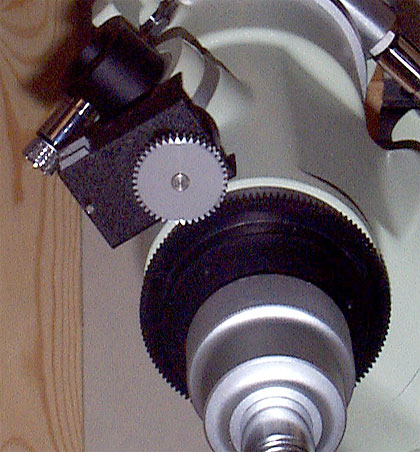
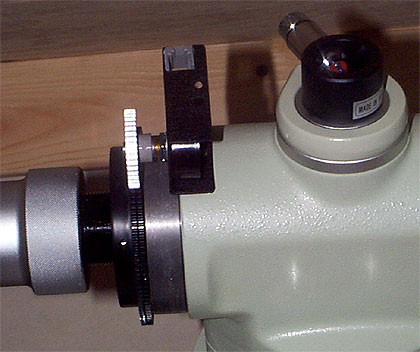
The screws that Takahashi supplies are very tiny, but they will work. They are just long enough to hold the encoder housing securely.