Note: to view all of the detail in these images, you may need to adjust the brightness and contrast controls on your monitor! Generally, increasing brightness reveals subtle details.
The sun image has been sharpened and had its contrast adjusted.
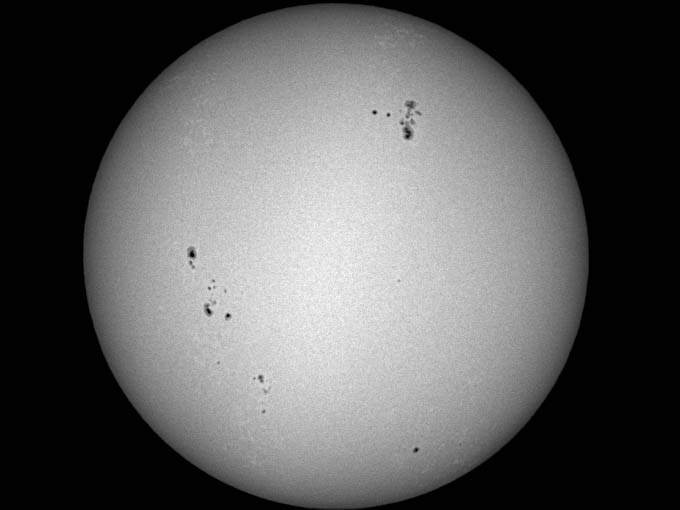
Solar disc, FC-60mm Takahashi refractor .11 seconds
ST-7E ~7pm July 30, 1999 (click for larger image)
The image has been sharpened and I have adjusted the contrast and brightness of the individual images to get them to match.
This and the following image were taken through the Baader solar film sold by Astro-Phyics.
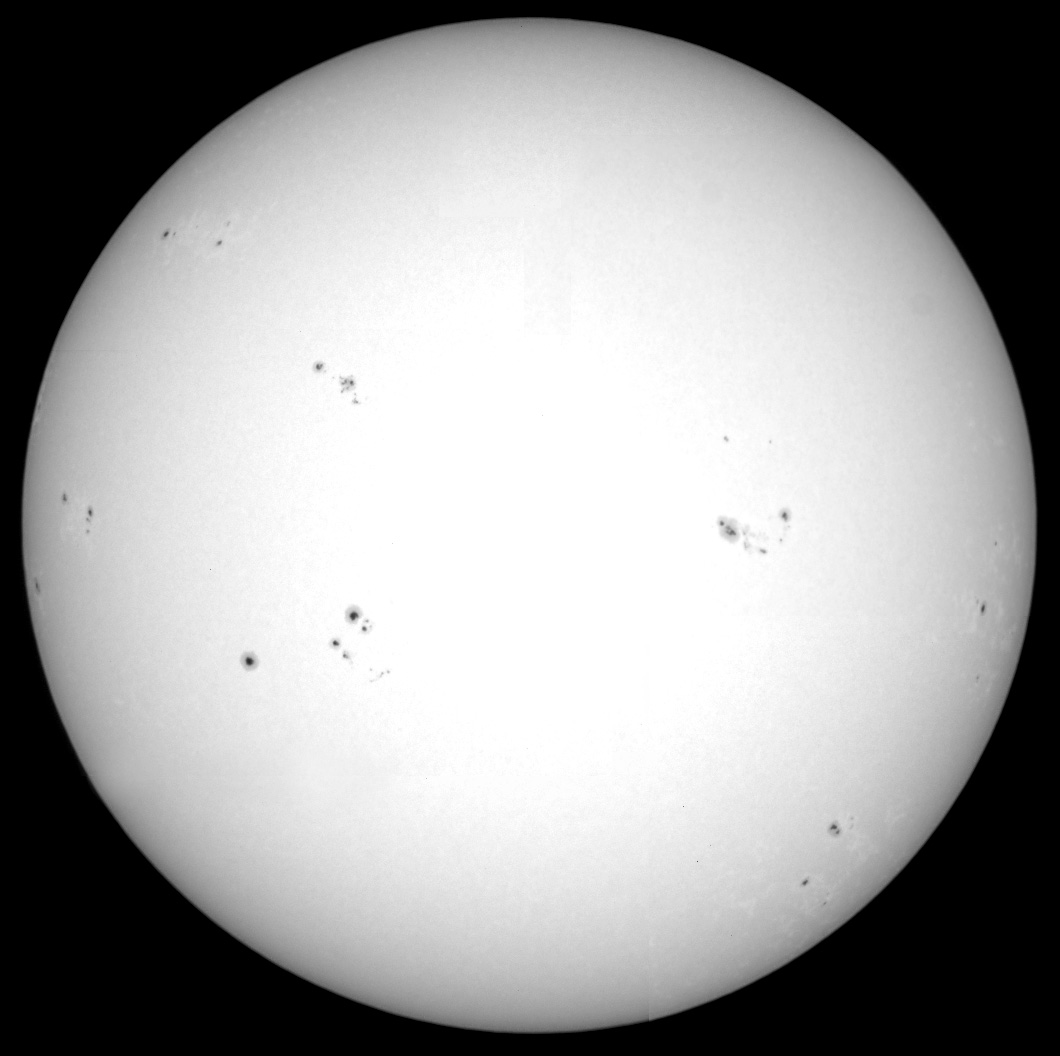
Solar disc, FC-125 5" Takahashi refractor
Collage of six images, each .11
seconds
ST-7E 10am 3/25/00 (click for larger image)
I applied quite a bit of sharpening to this image, perhaps too much. My goal was to make the sunspots stand out clearly.
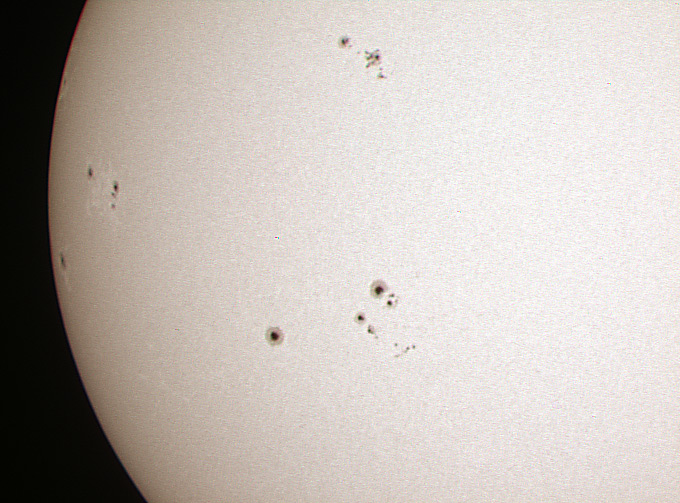
Solar disc, FC-125 5" Takahashi refractor
RGB images, red .11 seconds, green .23 seconds, blue .3 seconds
ST-7E 10am 3/25/00 (click for larger image)
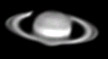
The two images of Saturn are also my first-ever of that solar system object. The first image has had only contrast and sharpening, and shows planetary bands and the Cassini division. I took it with my C8, using a 2X TeleVue Barlow and the ST-7E.
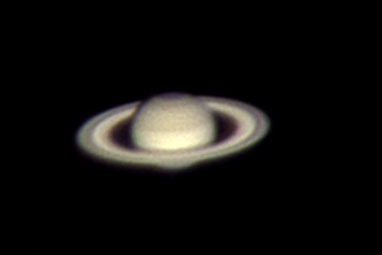
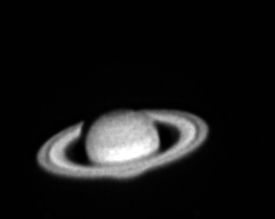
The second Saturn image shows the dangers of going too far with image processing. It doesn't really show more detail, but it looks false in the extreme, as some portions of the rings have disappeared!
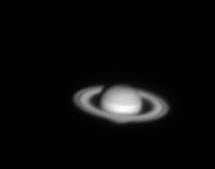
Saturn, ~4am July 31, seconds ST-7E C8
Similar exposure, too much deconvolution!

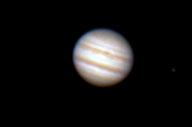
The image of Jupiter on the left is the raw data, with contrast adjust for clarity. The image on the right is a highly processed one which brings out details not obviously present in the original. Like the Saturn images, this was taken on the C8 with the 2X Barlow. This was far and away the best image of Jupiter of the night, with significantly more cloud detail than the other exposures -- pure luck! The processed image brings out a Jovian moon at top. The seeing was particularly good.
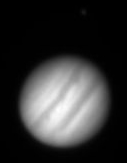
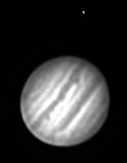
Jupiter, ~4am July 31, 1999, .11 seconds ST-7E C8
Left: raw image, contrast adjusted to show detail.
Right: Image processed with Maxim/DL deconvolution
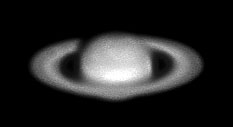
Saturn, early morning 8/8/99. Taken with my new Mewlon 210 scope and 2X Barlow for f/23..
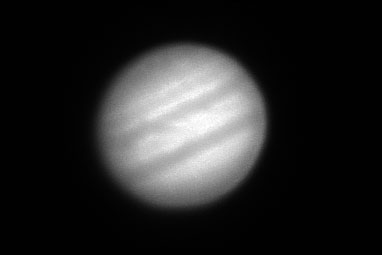
Jupiter, early morning 8/8/99. Also taken with Mewlon 210, using 2x Barlow before AO-7 for f/33.
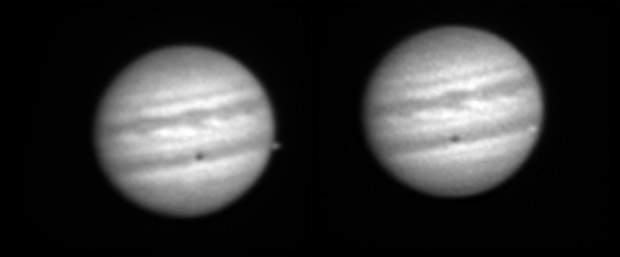
Jupiter, early morning 9/2/99. Taken with Mewlon 210, using 2x Barlow before AO-7 for f/33.
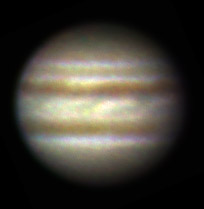
Jupiter, early morning 8/28/99. Taken with Mewlon
210, using 2x Barlow before Galaxy Optics RGB gel filter holder for f/33.
Exposures are .22 red, .5 green, and 1 second blue.